UK bill wants to remove videos of refugees crossing the channel

The UK Government’s plan to amend the Online Safety Bill is a truly Orwellian move.

Yesterday Reuters reported Culture Secretary Michelle Donelan wants to amend the Online Safety Bill so they can force platforms “to remove videos that show “in a positive light” migrants arriving in Britain illegally using small boats”.

First, people arriving in boats are refugees not migrants. As the UNHCR 1951 Convention and Protocol Relating to the Status of Refugees states, a refugee is anyone with “a well-founded fear of being persecuted for reasons of race, religion, nationality, membership of a particular social group, or political opinion” who finds themselves “outside the country of his nationality, and is unable to or, owing to such fear, is unwilling to avail himself of the protection of that country”. Until the facts of each case can be investigated, those arriving in boats are refugees. The alternative, where this government is headed, makes us barbaric.

The other thing to understand, despite what the vested interests, who benefit from this distraction, want you to believe, arriving in the UK “illegally” does not stop anyone from claiming asylum. Again read the 1951 Convention for yourself and you’ll see.

What this government are trying to do is remove video evidence of refugees fleeing for their lives, arriving on UK shores in appalling conditions, and in desperate need.

That way they can frame these arrivals as a threat.

I’d argue, even those propagandist videos, the kind posted by the deeply unpleasant Nigel Farage, would be taken down. If you turn down the sound, remove his stammering thoughtless monologues, you have footage of desperate people risking their lives, crossing open water, in a raft.

This government’s desire to blind people to the truth, hide the evidence, coupled with their ability to silence protest with the recently enacted Police, Crime, Sentencing and Courts Act 2022, means we’re headed towards, if not already in, the kind of authoritarian society we condemn elsewhere in the world.

A thought on protesting

No one who has ever confronted the police at a demonstration will ever look at them with respect again. You will never be able to shake the experience of their thuggish brutality. Inevitably blame for violence is laid at the the feet of protestors, as if the police are a neutral entity, they’re not, they assert the will of the state. The state, when it meets protestors on the street, does not represent the interests of the people.

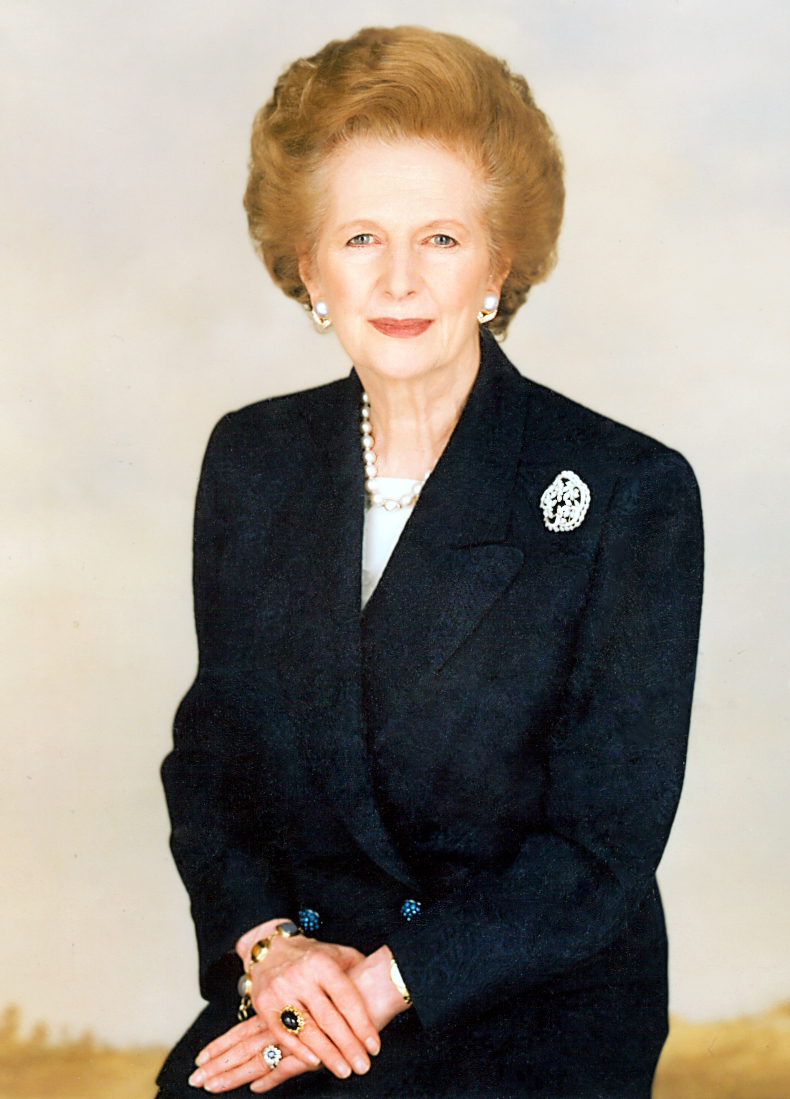
Margaret Thatcher’s authoritarian personality

Margaret Thatcher died on Monday. In death, as in life, she divides opinion.

Personally I think she was the worst thing that happened to this country since World War Two. All the problems we currently face have their genesis in her premiership.

The financial collapse of 2008 was a direct result, not just of the economic strategies she initiated, but more importantly a way of thinking she promoted. The senior managers and business brains of the banking sector, were the Young Turks of the financial industry when she came to power. The mantra of rampant self-interest she espoused, and they took to with such vigour, is the same “I’m all-right Jack” attitude, that lets these big-bonused-bankers do business the way they have and continue to.

Her devotees say she was a strong leader. For me she was a “strong leader” only to those who need that kind of guidance. To the rest of us she was nothing more than a bully. I think there was a callousness in her leadership that was nothing short of sadistic. She had a viciousness about her that I see in the “tough decisions” fiscal policy of George Osborne. No to a plan “B”, “C” or “D” is all-right when your worth £4.3 million, have a Notting Hill property worth £1.8 million and a wife who’s father is a life peer. A life peer who interestingly was also a member of Margaret Thatcher’s cabinet.

Recent entries about Carrion, specifically those regarding Anthony Reiner, have made me realise something about Margaret Thatcher. Her success was due in no small part to her authoritarian personality. At this point it might be a good idea for you to take a look at Erich Fromm’s 1957 article “The Authoritarian Personality“. I referenced it in posts that grapple with the totalitarian mindset of prohibition and Reiner’s authoritarian personality.

Fromm makes some interesting insights, notably the symbiotic relationship between the passive and active authoritarian. If I were to characterise Reiner as a passive-authoritarian, an individual who belittles himself so he can, as part of something greater, become great himself. I would characterise Thatcher as the active-authoritarian, the sadist who feels strong because she has incorporated others.

To those who say she encouraged people to be free of the state, to go out there and do it for themselves, I say the free market is not freedom. Ask anyone struggling to pay a utility bill, or trying to buy a house, or even secure a living wage, how free do they feel? Market freedom is only freedom to those who have. If you already have it, you’re free to take it somewhere else. What if you don’t?

That argument aside, one of the most interesting thing for me, in realising Thatcher had an authoritarian personality, is realising how many people have the emotional need to follower her. The irony of her message of self-reliance and freedom is actually a message of subjugation. You must supplicate yourself at the alter of Thatcher or you’re one of “them” and if you’re one of “them” you’re vilified, blamed for everything that is wrong with the world. If we rid ourselves of them, things will be better for us. That people is the dynamic of totalitarianism. Which is perhaps Thatcher’s real legacy.

Personally I do not mourn her passing, because unfortunately I have to survive the world she created.

Reiner’s authoritarian personality

In my two previous posts I tried to pin down the totalitarian mindset, what is it that makes Reiner such a vitriolic exponent of prohibition? That prompted me to uncovered Reiner’s moral and psychological weakness. Those things that are hurting not only himself, his psychological weakness, but also the people around him, his moral weakness.

Reiner’s moral weakness is his persecution of the drug user, a characteristic implicitly informed by his psychological weakness, an authoritarian personality. The realisation that Reiner has an authoritarian personality fits perfectly with the standing I have for him in my head but ignorance forces me to ask, what is an authoritarian personality?

I found a good answer in Erich Fromm‘s 1957 article “The Authoritarian Personality“. Fromm defines the authoritarian personality as “the inability to rely on one’s self, to be independent, to put it in other words: to endure freedom”.

I’m struck by this phrase “to endure freedom”.

At the core of the conflict between Adam and Reiner is the polarisation of freedom and security. As John Truby points out “a true opponent not only wants to prevent the hero from achieving his desire but is competing with the hero for the same goal“.

On first inspection the two men have completely different goals. Adam needs to save Christine, and Reiner wants to destroy all drug users. On the surface their desires are different, but I’ve realised the two men are actually fighting over the kind of world they will live in. Will it be a world ruled by freedom or one ruled security?

If Adam is to have a better life at the end of Carrion he must choose freedom to the exclusion of that demanded by Reiner. For Reiner freedom always exceeds to security, the safety of the nation, the security of belonging to something greater, a mindset that accepts the logic of the ruler and the ruled.

Exploring the digression a little further I am struck by the torturous state of mind that Reiner must suffer if freedom is something that has to be endured. The freedom implicit in a choice to take drugs must be physically painful for him. Which gives an indication of his hostility for drug users, and why he is compelled to correct the imbalance with violence. 

That said Reiner’s inability to endure freedom is not the whole story. Fromm’s description of the authoritarian character is complex, more detailed that I can outline here, but when I apply it to Reiner, he is described as an immature personality who “can neither love nor make use of reason”.

Reiner feels alone, gripped by fear, and needs to feel a bond with something greater. A bond he finds “in the symbiotic relationship, in feeling-one with others; not by reserving his own identity, but rather by fusing, by destroying his own identity”. His adherence to the prohibitionist cause is a subconscious desire to be part of a larger unit. What Fromm might describe as “masochistic and submissive character aims” has Reiner belittle himself so he can,”as part of something greater… become great himself”.

Reiner is a “passive-authoritarian” and can only survive by connecting with the figure of an “active-authoritarian”. A character type who, I now realise, is missing from Carrion. He is present in the abstract, in the form of a government, in the “Code-10” laws that seek to marginalise the drug user, but as a tangible character that Reiner has to look up to, has to submit to, they’re missing.

I need to fill this gap if the story world of Carrion is to work. It’s a mistake on my part to think Reiner can function without this figure.

Finally I think it’s a mistake to understand Reiner as an entirely passive. Inherent in the notion of the active and passive authoritarian is the notion of hierarchy. Reiner’s masochistic desire to be ruled, also comes with a sadistic desire to rule. It’s part of the symbiotic tendency inherent in the authoritarian personality, and goes some way to codifying the relationship between Adam and Reiner.

Fromm likens this characteristic to the tyrannical father “who treats his wife and children in a sadistic manner but when he faces his superior in the office he becomes the submissive employee”. Reiner treats Adam in a sadistic manner but in his dealings with his boss is submissive. Put simply he’s a bully.

I’m sure that Reiner’s desire to dominate Adam plays some part in Adam’s rejection of Reiner, but the exact nature of his choice eludes me at the moment. In the story world of Carrion, where the totalitarian mindset is all pervasive, what makes Adam step back and pause for thought?

Perhaps the simple act of hesitation puts him at odds with Reiner? He can smell the scepticism, which is enough to elicits the wrath of the pedant in Reiner.

Adam’s “rebellion” cuts Reiner to the quick, the same way freedom is something he has to endure?